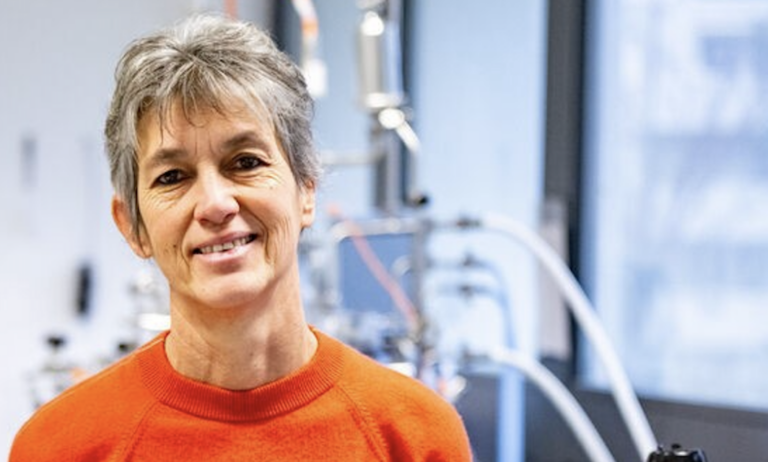

There are people whose careers resemble a world map slowly unfolding. Thierry Merckling is one of them. Forty years in plant protection across the globe, a technical, largely misunderstood sector, yet one on which the entirety of humanity’s food supply depends. Forty years spent understanding its inner workings, anticipating shifts before others did. Since 2021, he has been advising Mycea.
A portrait.
Learning the codes of the biocontrol industry
Thierry Merckling, Senior Advisor at Mycea, began his career in the 1980s, at a time when synthetic chemistry reigned unchallenged in agriculture. He worked for the major groups manufacturing the solutions on which millions of farms depended. He learned their industrial logic: massive R&D investment, long cycles. He also came to understand the concentration of the market in the hands of a few multinationals — Corteva in North America, Bayer and BASF in Europe, Syngenta, now owned by ChemChina, UPL for India, Sumitomo for Japan. It was here that he first noticed the fault lines forming in the chemical market.
Chemistry: a victim of its own effectiveness
When asked about the state of biocontrol, Thierry Merckling pulls no punches when discussing the sector’s limitations. “On one side, global R&D investment in synthetic chemistry runs into billions of dollars every year. On the other, budgets for biocontrol amount, at best, to tens or a few hundred million dollars,” he notes. This explains why 80% of crop protection remains chemical, and why entire segments such as biological herbicides are virtually untouched. It also explains why no biocontrol solution yet exists for the vast majority of crop-disease combinations — particularly in row crops (cereals, maize, soya, oilseeds) which represent the largest global volumes and remain almost exclusively dependent on chemistry.
In this context, biocontrol first developed — and has principally grown — in high-value specialty crops: vines, fruits, and vegetables. For these fresh products, regulations and major retailers impose strict pesticide residue thresholds, a viable and paying market for biological solutions.
"The number of chemical molecules authorised in Europe and France has declined by nearly 80% since the 1980s."
Far from quick simplifications, Thierry Merckling refuses to pit a virtuous biocontrol against a condemned chemistry. Synthetic chemistry was adopted on a massive scale because it worked radically. But this very radicalism led to its own limits. Resistance to synthetic inputs among diseases and pests multiplied, certain fungicide families lost their effectiveness, and health and environmental consequences made themselves felt. The number of chemical molecules authorised in Europe and France has declined by nearly 80% since the 1980s.
The resources allocated to biocontrol, though still modest, are today driven by the emergence of a large number of dedicated start-ups and by recent investments from the sector’s established players. Biocontrol has become structurally necessary. But necessity does not equal adoption.
Biocontrol: why farmers still hesitate
The international expert is direct: farmers are professionals, increasingly committed to the environment, but they still expect proven performance and economic reliability. On both counts, biocontrol must make its case.
Where a synthetic fungicide aims for eradication, biocontrol seeks to restore a balance. The approach is fundamentally different: it requires a holistic vision that combines prevention, disease and pest monitoring, interventions only when necessary, and a preference for alternative methods. This is what is known as integrated protection.
Furthermore, chemistry benefits from decades of economies of scale and low prices. Beyong the organic label, consumers show no willingness to pay a premium for it. Farmers therefore still frequently choose chemistry. To meet this challenge, biocontrol must develop technologies and production strategies that are economically viable and competitive. As long as documented efficacy and competitive cost are not achieved simultaneously, adoption will remain partial.
IPM: the true arena
Integrated Pest Management — IPM — is today the framework in which the future of biocontrol is being decided. Mycea’s advisor devotes a significant part of his activity to it, as a board member and trainer for the Academy of Biocontrol and Integrated Biological Protection.
The IPM principle rests on a premise shared by growers and scientists alike: no single solution can address all the health pressures a crop faces. Different modes of action must be combined: rotating product families, working on preventive agronomic practices (species selection, rotations, soil management, hedgerows, soil health), prevention and risk monitoring, as well as targeted interventions.
This is what makes biocontrol products strategic inputs: they diversify interventions and fit within a broader protection programme. Their modes of action are all the more valuable for often being multiple — and this diversity is an asset in strategies against the emergence of resistance. Treatment programmes following IPM principles recommend limiting the most effective single-target chemical fungicides to one or two applications per season. Yet some crops require up to 25 applications in severe situations. Biocontrol then makes it possible to build complete protection programmes and to replace certain molecules that are now prohibited.
This is precisely where sufficiently reliable, effective, and economically viable products are still lacking. The qualitative leap requires both conditions to be met simultaneously. Very few players are tackling both head-on.
Mycea: industrialisation as a guiding principle
When Dominique Barry-Etienne, co-founder of Mycea, and Thierry Merckling first met, he understood that the company’s leader carried a vision capable of unlocking both constraints at once.
For the expert, Mycea’s strategic value lies in the platform and research strategy the company has put in place. On efficacy, the Montpellier-based deeptech is exploring largely uncharted territory. The biocontrol industry has largely exhausted bacteria and yeasts. Filamentous fungi, by contrast, remain largely unexplored: according to sector analysts, Mycea is the only company in the world with this level of expertise in this organism. Two very recent competitors are only just beginning to show interest.
Fungal extracts offer complex mixtures of metabolites acting simultaneously on multiple targets — a multi-site mode of action by nature. For pathogens, circumventing such a mechanism is infinitely more difficult than adapting to a single-target molecule.
Thierry Merckling knows the value of this property from having seen it in action: Serenade, one of the world’s most widely used biocontrol products, owes its efficacy to the combined action of three naturally occurring substances patented together. Mycea takes this logic even further.
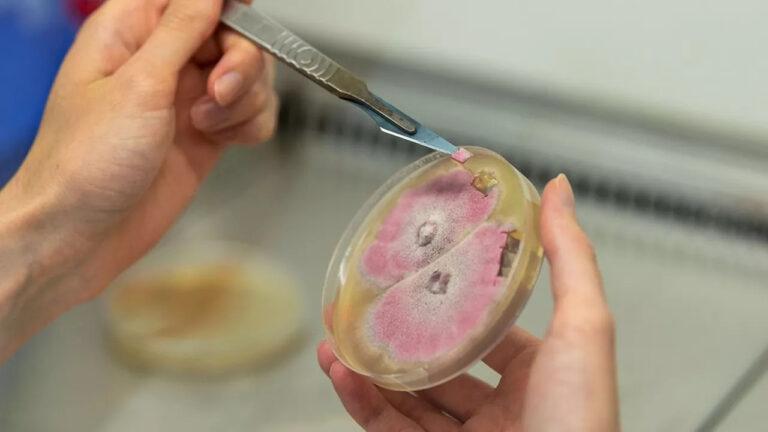
Mycea is not a single-product company. It is an engine of continuous innovation, built on more than 750 proprietary wild fungal strains transformed into 2,000 active extracts systematically screened. This platform is designed to generate new solutions capable of addressing challenges and meeting demand across numerous markets and market segments. “This is an expectation at the highest level among all sector stakeholders — farmers, technicians and advisors, distributors, and industrialists,” he confirms.
On costs, the start-up is attacking through two levers he identifies as the only ones capable of producing a lasting shift. The first: efficacy at very low doses (less active ingredient per hectare), meaning lower cost per application. The second: industrial optimisation of fermentation at large volumes, through a partnership with INRIA developing predictive models of fungal growth. The objective is to reach costs competitive with those of chemistry. If this challenge is met, it removes the principal barrier to widespread adoption.
The farmer of 2050 as the horizon
Thierry Merckling’s contribution to Mycea can be summed up in a few words: bringing the team a broader perspective on the sector and its real needs. Mycea is no longer a laboratory. It is an industrial platform that prioritises the sectors and geographies it targets. Without this perspective, the R&D approach could benefit from the best science in the world and still produce solutions that never reach their market — or reach it too late.
Thierry Merckling contributes to building Mycea’s strategy. He supports the team in defining – in a timely manner – the plant protection solutions needed to meet the expectations of the farmer of 2050.
"An industrial platform that prioritises the sectors and geographies it targets."
A professional who must already navigate complexity: the constantly evolving landscape of disease and pest pressures, regulations safeguarding consumer health, a shrinking toolbox of available solutions, and increasingly complex integrated protection programmes that must be developed and implemented. A professional who also judges a biocontrol product by the same criteria as a chemical one: results under real-world conditions, cost per hectare, consistency.
Finally, in biocontrol even more than in chemistry, it is essential to explain why a product works, how it works, when to apply it, and where to insert it in the treatment programme. This pedagogy cannot be improvised. It is what distinguishes biocontrol products that take lasting hold from those that remain niche.
What Thierry Merckling brings to Mycea cannot be reduced to a network or a contact book. It is forty years in the sector, a deep understanding of biological systems, of markets and players that can make all the difference in entrepreneurial success. Mycea has the rare privilege of benefiting from it.
Thierry Merckling - Key milestones
Holding an agronomy degree from INA-PG (now AgroParistech) Thierry Merckling began his career at a plant breeding research station in Senegal, before joining the Agricultural Chambers of north-eastern France as an agricultural advisor.
After an initial career in agrochemistry, where he gained extensive experience in plant protection, seeds, and plant breeding, he moved in 2003 into independent consultancy supporting start-ups and industrial players, founding TMBD Conseil.
He joined AgraQuest in 2006 — an American biotech pioneer in biocontrol — as Executive Director for the Europe, Africa and Middle East region, leading the company’s development until its acquisition by Bayer in 2012. He then joined Bayer’s European teams, responsible for the biosolutions portfolio.
Having returned to consultancy since 2015, he has collaborated notably with Dunham-Trimmer on several economic studies. He served as Treasurer and Board Member of IBMA France (2007–2013) and sits on the board of the Academy of Biocontrol.
He has been advising Mycea since 2021.